Metal roofing in Wichita: the roof that turns a hail total into a few dimples
Drive any county road out of Wichita and count the metal roofs on the farmhouses and shops. They're there because the people who own them have replaced enough shingle roofs. A good standing-seam roof is a fifty-year decision, and in hail country it's often the right one.
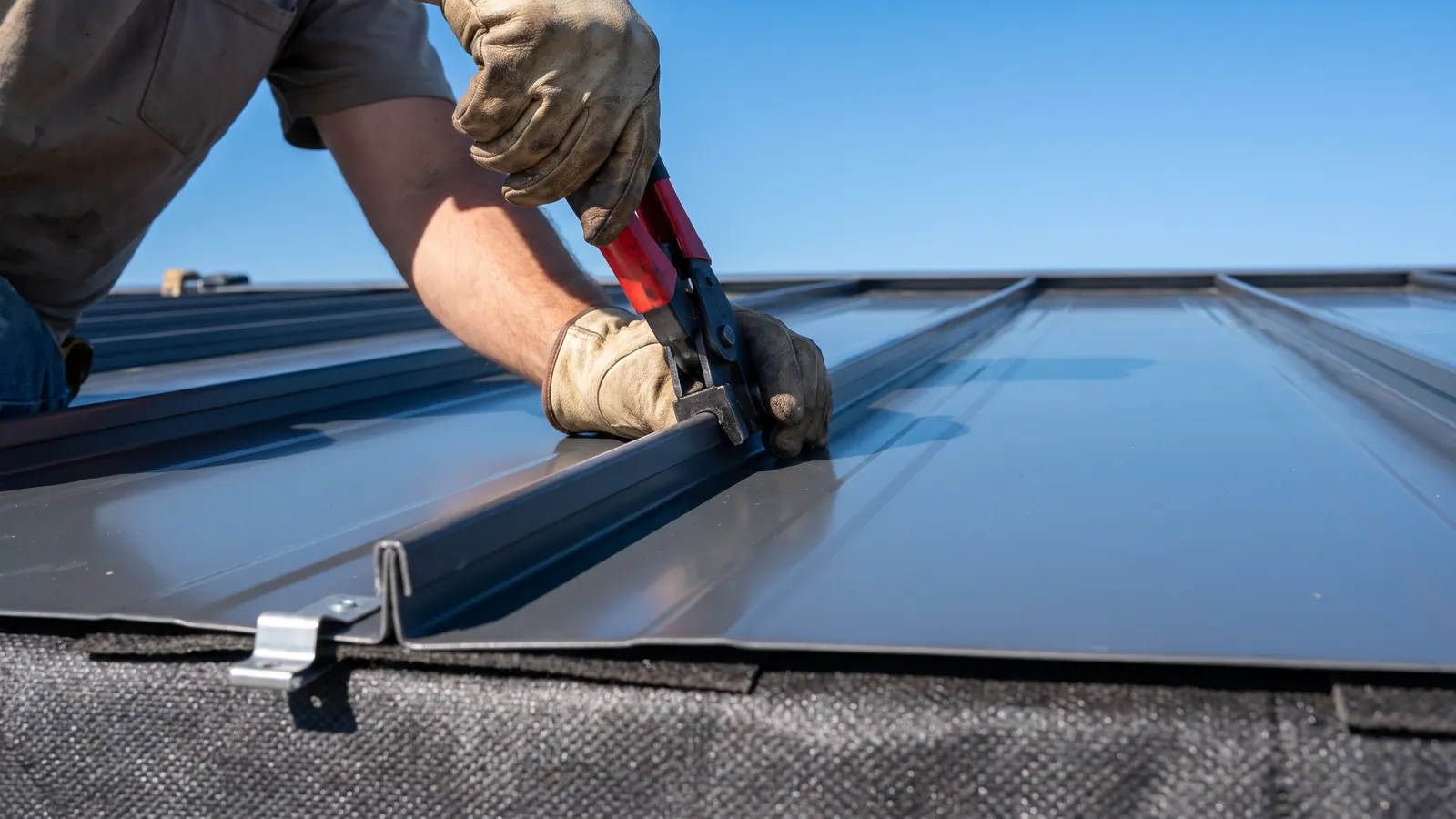
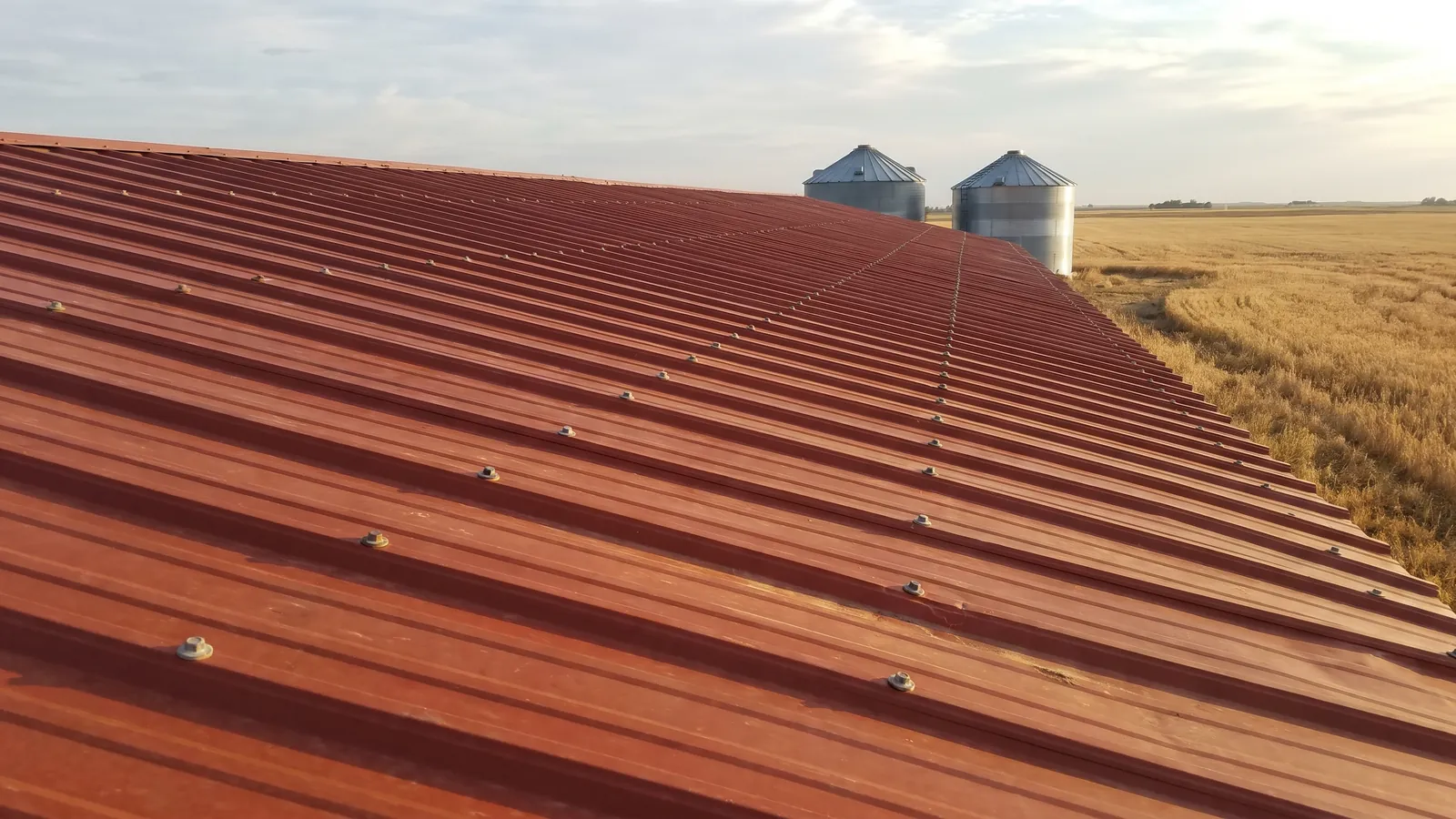
Two kinds of metal go on roofs around here. Standing seam is the residential choice: 24-gauge steel (or aluminum) panels sixteen to eighteen inches wide, with raised seams that lock together and hide every fastener under the metal, so there are no screws through the surface to back out and leak. It's installed over solid decking with a high-temperature underlayment, moves with the heat without tearing its fasteners, and carries a paint finish (Kynar, under a few trade names) warranted against chalking and fading for thirty years or more. Exposed-fastener panels (R-panel, PBR, ag panel) are 26- or 29-gauge sheets screwed through the face with gasketed screws, a third the price, and the right roof for a shop, a barn, a lean-to or a detached garage. On a house they're a compromise: the screw gaskets dry out and need replacing in fifteen to twenty years.
The hail question is why most Wichita homeowners call about metal. A heavy steel panel takes a 1.5-inch stone as a small dimple you can only see at a low sun angle; the same stone bruises an asphalt shingle through to the mat. A 2.75-inch stone, the size that fell September 3, 2025, can dent a metal roof visibly, and it will not open it up and let water in. Some carriers write a cosmetic damage exclusion on metal roofs, meaning they won't pay to replace dented-but-watertight panels, and some discount the premium for metal's impact resistance; both are questions for your agent before you buy, and we'll help you ask them. Many of our metal customers choose a textured or striated panel profile specifically because it hides dimples.
The other questions. Noise: on solid decking with underlayment and an insulated attic, a metal roof in rain is no louder than shingles; the drumming people remember is a barn with no deck. Heat: a light or reflective finish reflects summer sun and a standing-seam roof vents under the panels, and many Wichita customers report cooler attics. Snow: it slides, so snow guards go above doors and walks. Lightning: metal doesn't attract it and, being non-combustible, is safer if struck. Walking on it: possible in soft shoes on the flat of the panel, and best left to us.
Installation is slower and more exacting than shingles, which is where the price goes: panels measured and cut to each slope, seams mechanically or snap-locked, clips that allow expansion, custom-bent trim at eaves, rakes, hips and ridges, pipe boots made for metal, and every penetration planned before the first panel goes down. A standing-seam roof installed well is the last roof the house needs; installed by a shingle crew moonlighting, it leaks at every trim piece. Ask any metal roofer how many standing-seam roofs they've done and ask to see one.
Signs it's time to call
- You've replaced a shingle roof after hail more than once
- A farmhouse, shop or barn roof that's rusting through at the screws
- You want the last roof the house will need
- A cosmetic-damage or Class 4 discount conversation with your agent
- A modern or farmhouse-style home where the roof is part of the look
- Snow sliding off a metal porch roof onto a walkway
What the roofer does
Standing seam for homes
24-gauge steel or aluminum, concealed clips and fasteners, mechanically seamed or snap-lock, over high-temp underlayment on solid decking.
Exposed-fastener for outbuildings
R-panel and ag panel for shops, barns, garages and lean-tos; honest about the gasket-screw maintenance on a house.
Hail-minded profiles
Striated and textured panels that hide dimples, heavier gauges where hail is the deciding factor, and the insurance questions asked up front.
Trim bent to the roof
Eave, rake, hip, ridge, valley and sidewall trim fabricated for each roof, not stock pieces forced to fit.
Penetrations planned
Flues, vents and skylights located and flashed with metal-specific boots and curbs before panels are set.
Finish warranty registered
Paint-system and substrate warranties registered in your name, with the panel's gauge and profile on the estimate.
Metal roofing cost in Wichita
| Work | Planning range | What moves it |
|---|---|---|
| Standing-seam steel, 24-gauge, installed | $1,100 – $1,800 per square | Profile, seam type, roof complexity |
| Standing-seam aluminum, installed | $1,300 – $2,000 per square | Lighter; no rust at cut edges |
| Exposed-fastener R-panel or ag panel, installed | $700 – $1,100 per square | Shops, barns, garages |
| Typical 25-square home, standing seam | $27,000 – $45,000 | Against $11,000 – $19,000 for architectural shingles |
| Metal over existing shingles (where allowed) | −$75 – $125 per square | Tear-off avoided; we recommend tear-off on homes |
| Snow guards above entries | $30 – $60 per foot | Pad or rail style |
| Tear-off and decking repairs | As on any replacement | Priced per sheet |
Planning ranges for the Wichita area in 2026, not quotes. Your number is the itemized written estimate after the inspection, good for 30 days, with no deposit due until you approve it. The MABCD permit, when one applies, is its own line.
On the job
Questions about metal roofing
Does hail dent metal roofs?
Big hail can dimple them, yes; it almost never breaches them. The dents are cosmetic and often invisible except in low light, and textured panels hide them well. The trade: no leak, no claim, no deductible, versus a shingle roof that would have been totaled.
Is a metal roof loud when it rains?
Not on a house. Over solid decking with underlayment and an insulated attic it sounds like any other roof. The loud ones are open-framed barns.
How long does standing seam last?
Fifty years is a realistic figure for a 24-gauge steel roof with a Kynar-type finish in Kansas, with the paint warranty running thirty to thirty-five years. Exposed-fastener panels need their screws replaced in fifteen to twenty.
Will my insurance go down with a metal roof?
Some Kansas carriers discount for metal's impact resistance; some add a cosmetic-damage exclusion; a few do both. Ask your agent specifically before you commit, and tell them the gauge and profile.
Can you put metal over my shingles?
Over a single layer of flat-lying shingles, with furring or a slip sheet, it can be done and saves tear-off. On a house we still recommend tear-off so the decking gets inspected; on a shop, over-the-top is reasonable.
Is a metal roof worth it compared to Class 4 shingles?
If you plan to be in the house twenty-plus years or you're tired of filing claims, often yes. If you'll sell in five, Class 4 shingles are the better dollar. The metal roof cost guide runs the numbers.