Siding repair in Wichita: the west wall knows what the hail did
Hail doesn't fall straight down; it comes in on the wind, which is why the west and north walls of a Wichita house take the hits the roof shares. Cracked vinyl, chipped fiber cement and dented aluminum are repairable, and they belong on the same claim as the roof.
Walk around a Wichita house a week after a hailstorm and the siding tells the story the roof is hiding. On vinyl, cold-weather or large hail leaves half-moon cracks and punched-out chips, usually clustered on the wall that faced the storm; vinyl also gets brittle with age and sun, so a twenty-year-old west wall shatters where a new one would flex. On fiber cement (the HardiePlank-type boards on most homes built since the 2000s), hail chips the paint and the face, and big stones crack boards outright. On aluminum, it dents, which is cosmetic but obvious. On wood, the damage is usually older than the storm: rot at the bottom courses, at window sills and behind leaking gutters.
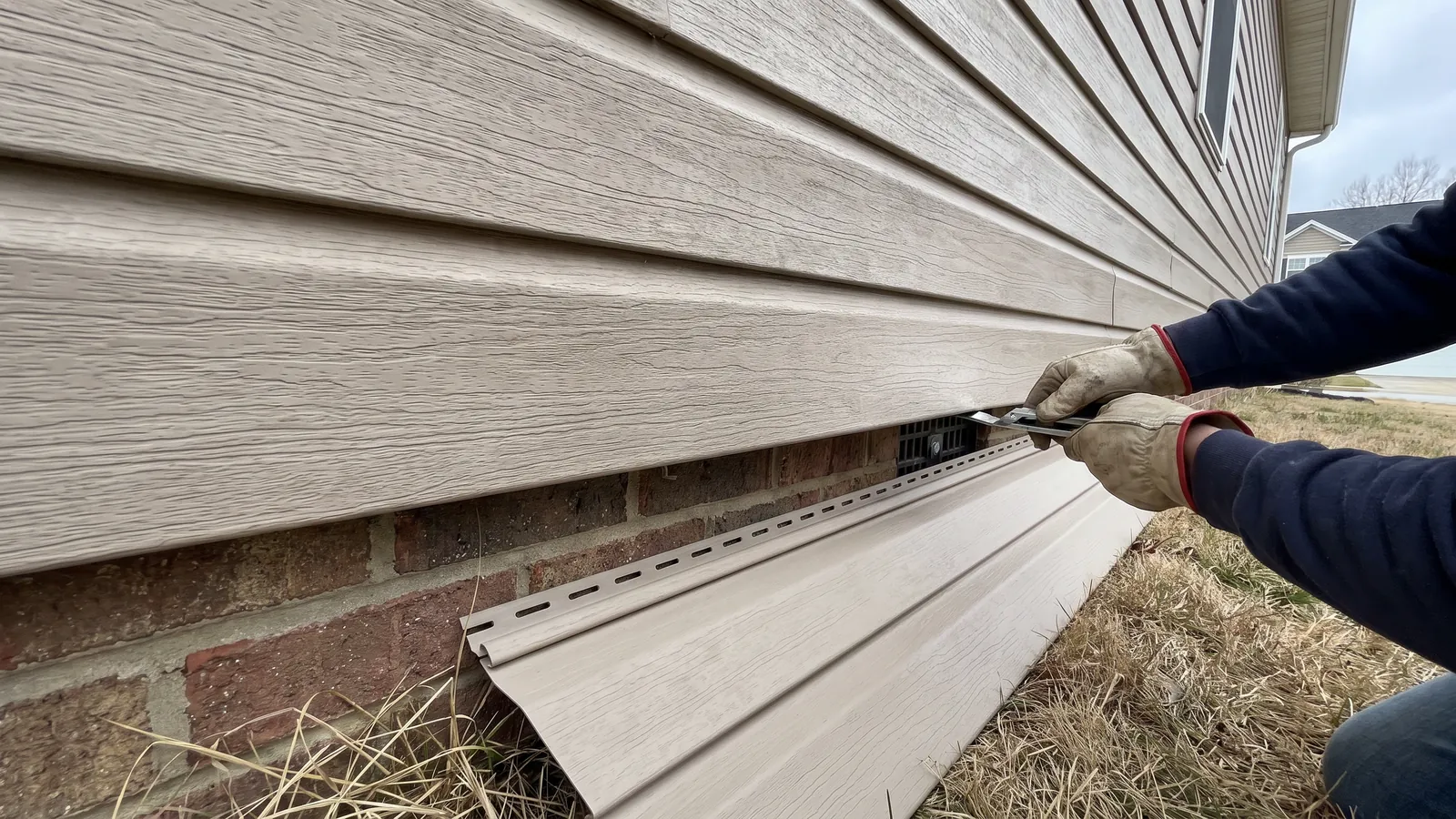
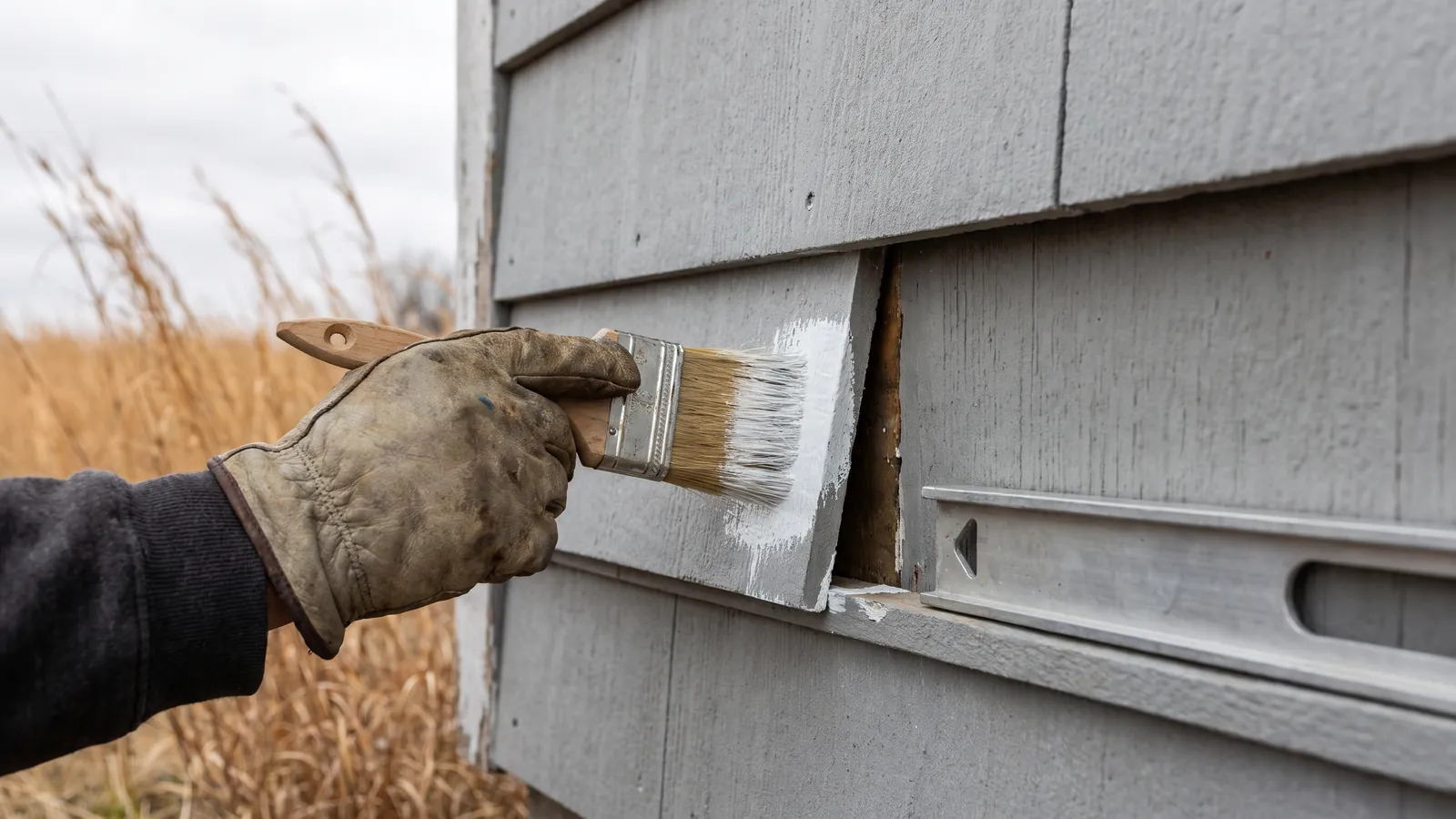
Repair starts with matching. Vinyl comes in profiles (Dutch lap, clapboard, board-and-batten), exposures (4-inch, 4.5-inch double, 5-inch) and colors that change by manufacturer and decade; a panel from the wrong line stands out from the street. We identify the profile from a sample, check whether the color is current, and source it; when a color is discontinued, the honest options are to replace the whole affected wall so the mismatch sits at a corner, or to harvest matching panels from a hidden wall and put the new panels there. Fiber cement is easier: the board is replaced, primed and painted to match. Repaired vinyl is unlocked with a zip tool and re-hung loose so it can move with the heat, which is the detail that keeps it from buckling in August.
On a storm claim, siding is often the piece adjusters underwrite: they'll pay for the damaged panels and not the wall, and the homeowner is left with a patchwork. Kansas policies and the adjuster's matching guidelines vary, and the argument for replacing a full elevation when the color can't be matched is a legitimate one to make, with photos. We document siding with the roof (close-ups of each crack with a scale reference, wide shots of each wall), list it on the same scope, and meet the adjuster for both.
And sometimes siding is just worn out. Faded, chalking vinyl from the 1990s, wood that's been painted one time too many, or a house you'd like to see in fiber cement or board-and-batten gets a full replacement quote alongside the repair, with the house wrap, flashing and trim done at the same time.
Signs it's time to call
- Half-moon cracks or chips in vinyl on the west or north wall
- Paint chipped off fiber cement in a scatter pattern after hail
- Panels loose or missing after a windstorm
- Buckled or wavy vinyl in summer
- Soft or peeling wood at the bottom courses or window sills
- A roof claim in progress and nobody has looked at the walls
What the roofer does
Matched by profile and color
Panel profile, exposure and color identified from a sample, current stock checked, discontinued colors handled by elevation or by harvesting.
Hung to move
Vinyl re-hung loose on the nail hem so it expands in August without buckling; fiber cement nailed and sealed to the maker's spec.
Full-elevation honesty
When a match can't be made, the whole wall is priced so the seam sits at a corner, and the matching argument is made to the adjuster with photos.
Documented with the roof
Each crack photographed with scale, each wall photographed wide, listed on the same storm scope as the roof and gutters.
Wood rot fixed right
Rotted courses, sills and corner boards replaced with primed material, the cause (a gutter, a missing kickout flashing) fixed too.
Full replacement quoted when it's time
Vinyl, fiber cement or board-and-batten, with house wrap, window flashing and trim, as a second option on the estimate.
Siding repair cost in Wichita
| Work | Planning range | What moves it |
|---|---|---|
| Vinyl siding repair, up to 10 panels | $400 – $1,100 | Profile and color availability |
| Vinyl siding, one full elevation | $1,800 – $5,000 | Wall size and story height |
| Fiber cement board replacement, per board | $90 – $200 | Includes prime and paint |
| Fiber cement, one full elevation | $3,500 – $9,000 | Trim and paint included |
| Wood siding rot repair | $500 – $2,500 | Courses, sills and corner boards |
| Full vinyl replacement, whole house | $5 – $9 per sq ft | Includes house wrap and trim |
| Full fiber cement replacement, whole house | $9 – $15 per sq ft | Includes house wrap, flashing, paint |
| Kickout and window flashing corrections | $150 – $500 each | Where water has been getting behind |
Planning ranges for the Wichita area in 2026, not quotes. Your number is the itemized written estimate after the inspection, good for 30 days, with no deposit due until you approve it. The MABCD permit, when one applies, is its own line.
On the job
Questions about siding repair
Will my insurance cover hail damage to siding?
Usually, as part of the same claim as the roof. The sticking point is matching: carriers often pay for damaged panels only. We document the walls and make the matching case with photos when the color is discontinued.
Can you match my vinyl siding?
If the line is current, yes. If it's discontinued, we'll show you the nearest match and price the full wall so the difference sits at a corner, or harvest matching panels from a hidden wall.
Why did only the west side get damaged?
Wind. Hail falls at an angle with the storm's wind, and in Kansas that's usually from the west or northwest. The windward wall takes the hits; the lee walls are often untouched.
Is fiber cement better than vinyl for hail?
It's more impact-resistant and doesn't go brittle with age, so it chips paint where vinyl cracks through. It costs more and needs repainting every twelve to fifteen years.
Can you repair siding without doing the roof?
Yes. Siding, soffit and fascia are stand-alone jobs; most people just find out about them during a roof inspection.
Why is my vinyl buckling?
It was nailed tight. Vinyl has to hang loose on its nail hem to expand and contract; panels nailed hard buckle in summer heat. We re-hang them correctly.